
Two Types of Pain

There are Two Types of Pain: Which are You Suffering From?
Though there are many back-pain conditions, such as sciatica, scoliosis, and a herniated disc, we can narrow them down to two basic categories: nerve-based pain and tissue-based pain.
You may have one or the other, or you may have both. Some treatments will ease nerve pain, others improve tissue pain. Some might, in some cases, work for both. But determining the right treatment for your particular case can require some investigation. This is, incidentally, why so many back-pain sufferers find inconsistent relief.
Let me explain the differences between the two types of pain.
As the name suggests, nerve-based back pain is caused by a nerve that’s not happy for some reason. Typically, it’s being pressured, pinched, compressed, or bone.
For example, if a nerve is surrounded by or next to a muscle that’s unusually tight and inflexible, that muscle presses on the nerve, causing it to hurt. This is common in sciatica.
If a nearby piece of bone, such as a vertebra in your spinal column, is out of position, it also might press on the nerve, causing pain. These bones themselves may be out of position due to an overly tight or inflexible muscle nearby. In other words, the whole process may start with a tight muscle but end with a nerve that’s irritated by a bone.
Nerve pain often, but not always, is felt as a burning, tingling, sharp, shooting, electrical, or numb sensation, or like "pins and needles.”
Tissue-based pain, on the other hand, originates in the muscles, tendons, ligaments, or other connective tissues in the body. (Most commonly, the pain originates in the muscles.) Think back to the last time you gave someone a neck or back massage. You may recall feeling one or more "knots” in the muscles. These knots are one of the main causes of tissue-based pain. One way to tell if a knot is really a knot, or just a bone, is to see if it exists on both sides of the body in the exact same position. If it appears on both sides, it might be a bone or part of a joint. If it only appears on one side, it’s more likely a knot.
This knot is more formally known as a "trigger point.” I don’t know why it’s called this, but I suspect it’s because if you press firmly on it, it triggers pain. Trigger points also are known to trigger pain in areas of the body other than where they’re located, and this is called "referred pain.”
A trigger point is caused in part by a pooling of toxins in your muscle tissue–which, in turn, is usually caused by imbalances in your diet, excess negative stress, and/or damage to the actual muscle fibers as a result of an injury and/or excessive exercise or physical activity.
If you’re under a lot of stress, for example, your body’s natural tendency is to shift to more shallow breathing and to "freeze” parts of your upper body (clenched jaws and tense shoulders are a few examples). This "freezing” reduces the amount of oxygen in your body and slows the circulation of blood in certain areas–such as your back. Without the optimal level of oxygen from deep breathing and without natural body movement to keep the blood flowing, toxins get "stuck” within tight muscle tissue. If this is allowed to continue for a long enough period of time, a trigger point develops, causing pain.
Other types of tissue-based pain, such as pulled or strained tendons or ligaments, also can be caused by overuse. While a sudden trauma or injury can pull a ligament–a very extreme form of overuse–doing the same type of moderate-intensity activity too many times can strain a tendon or ligament, too. There is a fine line between using and overusing your tendons and ligaments.
Notice how similar types of sharp, shooting pain–a trigger point in the muscle, an inflamed tendon, or a compressed nerve–can be caused by entirely different reasons. As you’ll see in the next chapter, this is quite common. You also will see that if you don’t know what’s causing your pain, you could very easily choose the wrong treatment approach!
You may already have an idea which type of pain you have. If not, you’ll figure it out shortly with the information to come. For now, just remember that you need to know what’s causing the pain before you can reasonably expect to get rid of it.
Find out why you're still in pain and what you can do about it in this video

Dr. Brian Paris
Dr. Brian Paris, D.C. is the Medical Advisory Board Lead at The Healthy Back Institute. With over 20 years of clinical experience in pain management and postural restoration, Dr. Paris empowers patients to live pain-free without drugs or surgery.

Related Articles
Recommended Reading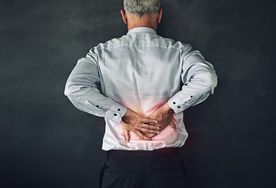
Dietary Fixes That Ease Back Pain Fast
Inflammation is a BIG reason so many people around the world are suffering from back pain right this very minute. In…
7-Day Back Pain Cure Recommended Resources
Short-Term Pain Relief Treatments Natural Pain-Relief Supplements Heal-n-Soothe® Heal-n-Soothe ® is a combination of…

Spinal Stenosis Action Plan
Spinal stenosis is a condition in which the spinal canal narrows, compressing or "squeezing” the spinal cord and nerves…
Sign Up Now For LESS PAIN, MORE LIFE Our FREE E-Newsletter…
Kiss your pain goodbye when you sign up to receive our free, LIVE PAIN FREE email newsletter, which is always full of the latest and most powerful, pain relieving information from the world's leading pain relief experts.
Reader Comments & Discussion (11)
Leave a Comment ↓