
A Little-Known "Cheat" for Powerful Targeted Pain Relief

If you’re facing this daily battle, you know it’s not only a physical fight but also a mental one. As the study’s lead author Jae Kennedy, a professor of health policy and administration at Washington State University, told Health Day:[ii]
"Being in pain is depressing … Being in pain all the time is tiring. Being in pain all the time is anxiety-provoking. So it's plausible that pain is triggering other kinds of more psychological distress."
Many people reach a point where they simply feel like giving up, especially if you’ve tried medications, injections and surgery, only to find that you’re still miserable and in pain. But when you learn how to work with your body’s natural healing abilities, you’ll find there is hope … and there is life without pain.
It Makes Perfect Sense...
Increased circulation helps speed your body’s natural healing process, because as blood flow increases so does the delivery of oxygen and nutrients, while metabolic wastes are carried away. When you take proteolytic systemic enzymes, they help break down scar tissue in your body, allowing blood flow to increase.
Systemic enzymes are designed to survive your stomach acid, allowing them to enter your small intestine and be absorbed into your bloodstream. Once there, they travel all over your body to wherever they’re needed, and they get “used up” as they connect to excess proteins. Within about 15-30 minutes of taking systemic enzymes, they’ll be in your circulation, used up as necessary by your body, and on their way out.
There is a simple way to direct the enzymes exactly where you’d like them to focus their “magic,” however, and that is by using a far-infrared (FIR) heating pad. When an area of your body gets hot, your body tries to cool itself off by sending more blood to the area as a natural protective mechanism. This increase in circulation then brings the systemic enzymes in your bloodstream right into the area you need healed.
Ideally, take the proteolytic enzymes about 15-30 minutes prior to applying the heat. This gives your body a powerful way to target painful areas to get relief fast.
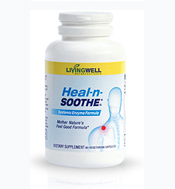
In your body, systemic enzymes are known for fighting inflammation and stimulating your immune system, both crucial for pain relief and healing. Even better, the proteolytic enzymes in Heal-n-Soothe® are combined with 11 other anti-inflammatory ingredients for pain relief, such as ginger, which helps to stimulate blood flow for even more improved circulation.
As the enzymes break down scar tissue and blood flow increases, your painful areas will also be flooded with oxygen, which brings further pain relief. Both FIR heating pads and enzymes increase blood flow, oxygen, nutrients and metabolic waste removal. That’s essentially what healing is. Doing this over time is a win-win, and you’ll soon find that your pain lessens, your mobility improves and you’re able to be more functionally active.
You’ll be able to move around more, play sports, wash the dishes … do all of those things that often get taken for granted by those not in pain.
Three Types of Deep Heating Pads
to Fit Your Unique Pain
Do be careful, however, as not just any heating pad will do. The Deep Heat collection of far-infrared heating pads sends warmth up to 20 times deeper below your skin than conventional electric heating pads. This heat stays with you for up to six hours and, as mentioned, increases your circulation, which promotes healing so the pain stays away. Better still, these unique heating pads don’t come in “one-size-fits-all” packages, which decidedly do not fit everyone’s unique aches and pains. You can choose from:
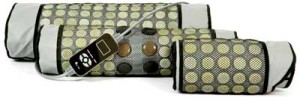 The Ultra: Designed for neck, back and spine pain relief.
- The ISO-Wrap: Designed for joint pain relief, with cutouts that allow you to wrap the pad around joints comfortably, and Velcro straps to hold it in place.
- The Full Body: Designed for full-body relief and to aid circulation from heat to toe. This pad is nearly six feet long and 24 inches long. You can even sleep on it.
You will not get far-infrared heat with ordinary heating pads, either. Far-infrared heat has therapeutic effects, helping to boost your circulation, break down and flush out toxins from your tissues, relax muscle cramps and more.
In a study created by Nishi Kyusyu University in Saga, Japan, which tested participants in pain severe enough that they couldn't work, they discovered that by adding far-infrared heat therapy to their treatment (including cognitive behavioral therapy, rehabilitation, and exercise therapy) 77% of the participants in the study were able to return back to work![iii]
Remember, for MAXIMUM anti-inflammatory effects, pain relief and healing, take Heal-n-Soothe® proteolytic enzymes 15-30 minutes before using your heating pad. As the enzymes enter your bloodstream ready to work their magic, the heating pad will direct them where to go so you get powerful targeted pain relief, right where you need it most.

[i] J Pain. 2014 Oct;15(10):979-84.
[ii]Health Day October 30, 2014
[iii] International Congress Series Volume 1287, April 2006, Pages 298-303

Dr. Brian Paris
Dr. Brian Paris, D.C. is the Medical Advisory Board Lead at The Healthy Back Institute. With over 20 years of clinical experience in pain management and postural restoration, Dr. Paris empowers patients to live pain-free without drugs or surgery.

Related Articles
Recommended Reading
Fox News BLOWS LID OFF Pain Cream Scam
This might be one of the most despicable acts I’ve ever seen from the Medical Establishment… Fox News reports…
Does Turmeric Relieve Joint Pain?
I get a lot of flak from the mainstream medical community. They call people like me “quacks”… Or “snake oil salesmen”……

10 Simple Pinched Nerve Exercises
If you've ever experienced a pinched nerve, you know that it can be an annoying and painful condition. Learn how to…
Sign Up Now For LESS PAIN, MORE LIFE Our FREE E-Newsletter…
Kiss your pain goodbye when you sign up to receive our free, LIVE PAIN FREE email newsletter, which is always full of the latest and most powerful, pain relieving information from the world's leading pain relief experts.
Reader Comments & Discussion (5)
Leave a Comment ↓