
The Japanese Solution to Perfect Blood Pressure

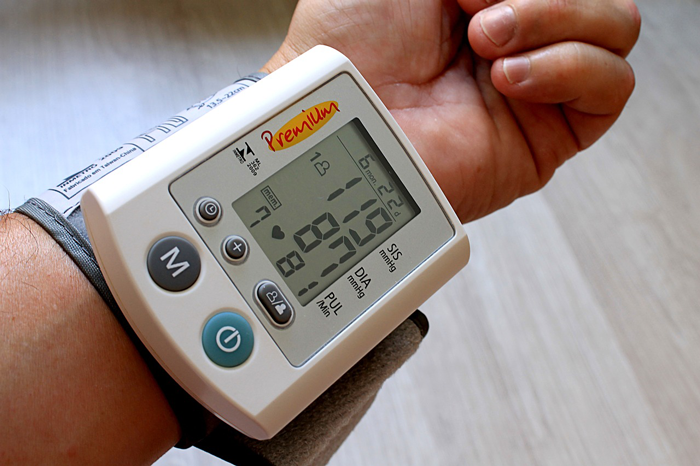
Do you watch what you eat... try to exercise… take prescription drugs...
And still struggle with your blood pressure?
This can be frustrating. You try to do everything your doctor orders. You give up your favorite foods, exercise, and even take 2-3 meds per day. Yet, your blood pressure is still stubbornly high at your next check-up.
But I’m not going to lecture you and “raise the dosage” like most doctors.
I’m going to give you the missing piece of the “hypertension puzzle.”And it has ZERO to do with too much salt, too little exercise, or trying another prescription drug.
Because while most doctors would rather hand you a script for Prinivil, Diovan or another billion-dollar blood pressure med… scientists in Japan (and Europe) already discovered a natural way to get your blood pressure under control, fast.
You see, Dr. Hiroyuki Sumi - from Tokushima University and Chicago University Medical School - discovered a specific type of enzyme supports healthy blood circulation. Dr. Sumi also discovered it can halt blood clots from forming and for dissolving already formed clots.1
A later randomized double-blind placebo control study (the "Gold Standard" of epidemiologic studies) showed patients who took this same enzyme saw their systolic blood pressure drop by over 13 points!2
How does it work?
It all starts with dissolving a “sticky goop” that could have invaded your bloodstream. And experts say this “glop” has turned up the pressure in the blood of millions of Americans.
What am I talking about?
The real secret behind "hypertension" (HINT: It’s not salt!)
If you’ve been a reader for awhile, then you’ve heard me talk about fibrin.
Fibrin is that “sticky” scar tissue your body uses to help cover and heal wounds. It’s a natural part of your immune system.
Fibrin is helpful for many things (closing wounds, repairing cells, etc). Yet, excess fibrin can result in chronic joint pain, inflammation, heart disease, and even cancer.
Fibrin can help make a scab on a wound, but it’s also used to isolate an injured area of your body. By isolating an injury, your immune system protects the area. It then uses white blood cells and other proteins to fix the problem.
Fibrin is sticky, strong and forms a very fine “mesh” that looks like a net.
Under normal circumstances, fibrin is not a problem.
But in our modern world, fibrin is overproduced.
In most folks, fibrin is a runaway freight train.
Dr. Marcel Levi and his team at the University of Amsterdam discovered a strong link between proinflammatory cytokines and excess fibrin.
In other words, this overproduction of fibrin doesn’t come from injuries.
It comes from chronic inflammation caused by environmental toxins and highly processed foods.
And does fibrin build-up affect your blood pressure?
You’d better believe it!
Researchers from Harvard Medical School says excess fibrin gets "lodged" in your blood vessels.
This sticky fibrin enters your bloodstream. This transforms your blood into a syrupy, gooey mess.
And how does “goopy” blood affect your blood pressure?
Studies headed by the “father” of blood flow research - Dr. Shu Chien of Columbia University - show high blood viscosity (“thick” blood) causes hypertension (high blood pressure).
And it all circles back to an overgrowth of fibrin caused by rampant inflammation.
Now, certain medications can help “turn down” blood pressure. But none address too much fibrin. And ALL meds come with a laundry list of side effects.
In fact, I’ve talked to many folks who chose to STOP taking their blood pressure meds.
Why?
Because they’d rather “kick the bucket” earlier than necessary then have to “live” with nasty side effects from Big Pharma’s blockbuster BP pills!
But some groundbreaking new research shows you no longer have to live this way.
In fact, there’s a natural way to safely dissolve excess fibrin…
And get back to a healthy 120 quicker than ever before!
How?
By...
Clearing out “blood gunk” with Mother Nature’s favorite fibrin dissolvers...
They’re called proteolytic enzymes.
And what do proteolytic enzymes do?
Studies show they naturally eat and dissolve excess fibrin clogging up your blood. They also recognize “bad” prostaglandins that cause excessive inflammation and dispose of them.
Now, proteolytic enzymes occur naturally in your body. However, after age 27, the body’s production of proteolytic enzymes plummets.
And if that wasn’t bad enough…
Your body is not naturally equipped to dissolve the amount of fibrin that you’re getting due rampant inflammation from chemicals in our modern environment.
In other words, inflammation has “broken” your body’s system to produce ENOUGH proteolytic enzymes to dissolve hunks of massive fibrin overgrowth.
And it’s nearly impossible to replace your store of proteolytic enzymes through diet alone, even with a diet of all healthy, organic foods.
But you can safely and easily replace them through supplementation. And unlike many vitamins & drugs, you literally cannot get too many enzymes.
When one considers how helpful they are for reversing damage to your cardiovascular system… relieving joint pain... inflammation from diabetes… AND lowering blood pressure.
It’s not just a “good idea” to find a high-quality proteolytic enzyme supplement for daily use…
It’s essential.
Plus, proteolytic enzymes have over 40 years of use… and over 160 peer-reviewed verifying studies behind their effectiveness.
As I mentioned before, Japanese have used proteolytic enzymes for years alongside mainstream medical methods.
So know that unlike many “miracle” supplements, proteolytic enzymes are NOT all hype. Science shows they actually work.
However, there are only a handful of proteolytic enzyme supplements on the market.
But you can get the world’s most potent proteolytic enzyme supplement right here at the Healthy Back Institute®.
It’s called Heal-n-Soothe®...
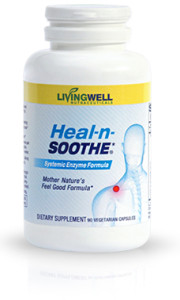
Learn more about how Heal-n-Soothe® can help you.
References
- "Nattokinase, the "Japanese wonder" gets your blood pumping." Townsend Letter for Doctors and Patients. 2005. HighBeam Research. (December 17, 2009).
- Kim JY, Gum SN, Paik JK, Lim HH, Kim KC, Ogasawara K, Inoue K, Park S, Jang Y, Lee JH. Effects of nattokinase on blood pressure: a randomized, controlled trial. Hypertens Res. 2008 Aug;31(8):1583-8.

Dr. Brian Paris
Dr. Brian Paris, D.C. is the Medical Advisory Board Lead at The Healthy Back Institute. With over 20 years of clinical experience in pain management and postural restoration, Dr. Paris empowers patients to live pain-free without drugs or surgery.

Related Articles
Recommended Reading
What Do Cancer, Heart Disease, and Arthritis All Have in Common?
What do cancer, heart disease, and arthritis have in common? As it turns out, they all involve a “sticky” protein…

Difference in Blood Pressure Between Your Arms Means HIGHER Heart Attack Risk
The American Heart Association recommends getting your blood pressure checked at least once every two years starting at…

How to Overcome Your Family History of High Blood Pressure
High blood pressure tends to run in families, so if you have a close relative with this condition you’re at an…
Sign Up Now For LESS PAIN, MORE LIFE Our FREE E-Newsletter…
Kiss your pain goodbye when you sign up to receive our free, LIVE PAIN FREE email newsletter, which is always full of the latest and most powerful, pain relieving information from the world's leading pain relief experts.
Reader Comments & Discussion (9)
Leave a Comment ↓