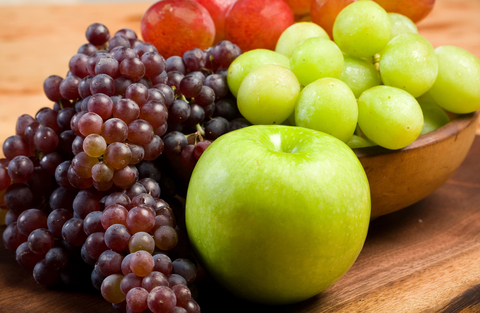
Whole fruit is an important source of antioxidants, vitamins, minerals, and fiber – beneficial compounds that many Americans are lacking. Eating fruit has been linked to a number of health benefits, from lowering your risk of heart disease, stroke, type 2 diabetes and cancer to helping you lose weight and avoid obesity-related diseases.[i]
Yet some fruits are healthier than others … and some can be downright dangerous. Check out the most dangerous fruit list below to see if any of your favorites are on the list.
5. Apples
Apples are rich in antioxidants and anti-inflammatories shown to lower the risk of asthma and lung cancer, help with blood sugar regulation, and possibly lower your risk of macular degeneration and Alzheimer’s disease. They’re overall a healing fruit, but watch out for the seeds.
Apple seeds contain plant toxicants called cyanogenic glycosides (amygdalin in particular), which can release poisonous hydrogen cyanide when eaten.[ii] Cherry, peach and apricot pits also contain amygdalin.
Apples also topped the Environmental Working Group’s (EWG) Dirty Dozen list, which is the produce most likely to be contaminated by pesticides. Of the apples they sampled, 99 percent tested positive for at least one pesticide residue.[iii]
4. Strawberries
Strawberries are #2 on EWG’s list. Tests have revealed up to 13 different pesticides in one strawberry sample, and 54 different pesticides in all. Prevention reported:[iv]
“The testing turned up nine known or probable carcinogens, 24 suspected hormone disruptors, 11 neurotoxins, 12 developmental or reproductive toxins, and 19 honeybee toxins. Traces of fungicides captan and pyraclostrobin turned up on more than half of the strawberry samples tested. Your best bet for right now? Stick with organic strawberries.”
3. Grapes
Grapes also made EWG’s dirty dozen list, and 60 percent of the grapes sampled tested had residues of neonicotinoid pesticides. Research suggests that neonicotinoids may harm children’s brain development, and they have been implicated in the collapse of honeybees and other pollinators.[v] When buying grapes, choose organic when possible.
2. Rhubarb
Rhubarb is technically a vegetable, but I’ve included it on this list because it’s typically used as a fruit (in desserts, jam and the like). Rhubarb stalks are safe to eat, but the leaves of this plant are very poisonous. If you eat rhubarb leaves, it can cause vomiting and diarrhea, along with seizures, difficulty breathing, kidney problems, coma, and even death due to the oxalic acid salts they contain.
1. Tomatoes- worst fruit for joint pain
Tomatoes, which are considered a fruit in most of the world, are full of beneficial antioxidants, like lycopene. But there’s a toxic substance in the tomato skin called solanine which is a glycoalkaloid poison. Solanine acts as a natural pesticide. It discourages insects and animals from eating the fruit, so it’s more likely to survive.
For most people, eating trace amounts of solanine doesn’t cause any problems. That’s why doctors regard tomatoes as a healthy food for most people. But for those of us with joint problems, solanine can absolutely wreak havoc on our joints.
Solanine triggers a process inside your joint called “an inflammatory state.” Your body detects the solanine, and it sends an immune response to your joint to respond to the threat. This inflammatory state – and the resulting immune response – make your joint issues, stiffness, and soreness worse.
So try eliminating tomatoes for a few weeks, and see how much better your joints feel.
Reducing your tomato intake is a great first step towards eliminating your joint problems. But did you know there are five other foods that increase joint problems even MORE than tomatoes do?
To learn exactly which five foods you must avoid if you have joint problems, click the link below.